
Amber Miller, President of the William and Flora Hewlett Foundation: The Promise and Peril of AI and Emerging Technologies in a More Uncertain World
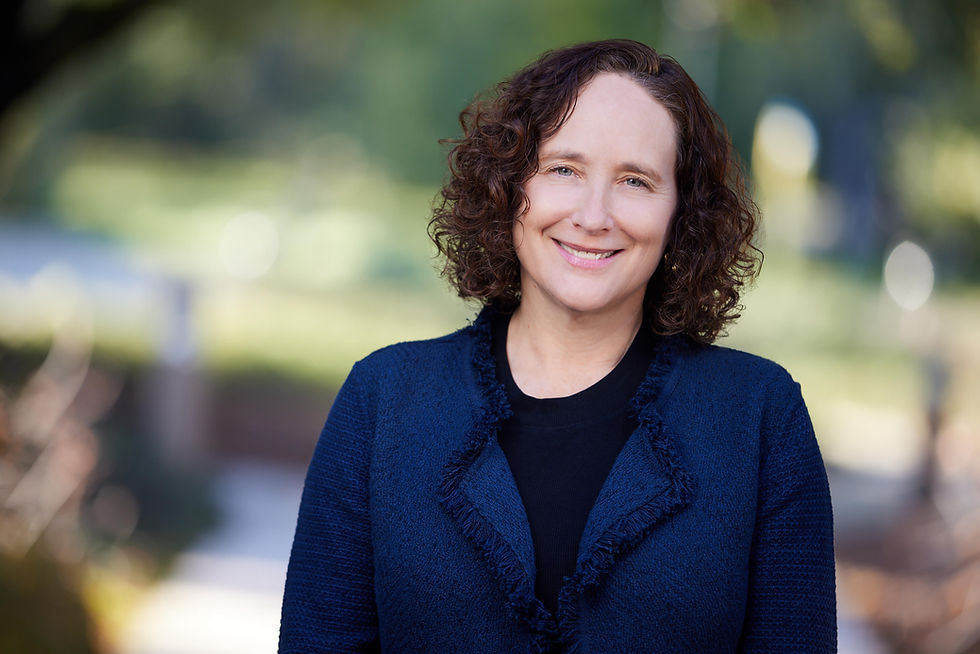
With an endowment exceeding $14 billion and annual grantmaking of roughly $600 to $700 million, the William and Flora Hewlett Foundation occupies a distinctive position in global philanthropy: large enough to shape conversations, yet intentionally focused on convening expertise, supporting long-term thinking, and backing institutions working on society’s most complex challenges. In this episode, Amber Miller, President of the William and Flora Hewlett Foundation, joins Alberto Lidji to discuss how one of the world’s leading foundations is approaching artificial intelligence, emerging technologies, and an increasingly uncertain global landscape.
The conversation explores how AI is becoming a cross-cutting concern across the foundation’s work, spanning climate, democracy, education, public systems, and global development. Rather than treating AI solely as a technological issue, Miller describes efforts to connect traditionally separate areas of expertise, creating new ways to understand both risks and opportunities.
A central focus is security. Miller reflects on near-term threats linked to AI and emerging technologies, including vulnerabilities affecting hospitals, energy grids, water systems, transportation networks, and other forms of critical infrastructure. The discussion also examines the convergence of AI with biosynthesis and quantum technologies, including concerns that advances in quantum-enabled decryption could eventually undermine existing encryption systems with implications for public systems, state resilience, and national security.
The governance challenge is equally complex. Beyond familiar narratives centered on competition between the United States and China, Miller points to the potential influence of "middle powers" and subnational actors in shaping norms, oversight, and approaches to AI governance. The episode considers who will help guide the future of these technologies: governments, researchers, civil society, universities, industry, philanthropic institutions, and actors operating across borders and sectors.
Yet the conversation is far from pessimistic. Miller repeatedly emphasizes that AI is not inherently good or bad, and that its ultimate impact will depend on how societies choose to deploy it. Potential opportunities discussed include:
Accelerating breakthroughs in medicine, genomics, and disease treatment
Improving efficiency in clean energy systems and supporting climate solutions
Enabling more personalized learning and strengthening educational outcomes
Expanding productivity, unlocking new forms of work, and augmenting human capability rather than replacing it
Drawing on a career spanning astrophysics, university leadership, and science-informed public engagement, Miller offers a perspective shaped by interdisciplinary thinking and a deep interest in solving difficult problems. Throughout the episode, she returns to a recurring theme: humanity is living through a pivotal moment marked by rapid technological advancement, societal polarization, and mounting global challenges, but also extraordinary potential for ingenuity, collaboration, and progress.
This is a conversation about AI, philanthropy, governance, and emerging technologies. More fundamentally, it is a conversation about whether institutions can work together to steer powerful innovations toward human flourishing rather than instability.
About Amber Miller
Amber D. Miller is President of the William and Flora Hewlett Foundation. She oversees the $13 billion charitable foundation, which invests in creative thinkers and problem solvers in more than 1,000 grantee organizations working to ensure meaningful opportunities to thrive for people, communities, and the planet. She leads the foundation in collaborating with partners to address our toughest problems – from the existential threat of climate change, to the future of our democratic, economic, and educational systems.
Before joining the foundation, Amber served as dean of the USC Dornsife College of Letters, Arts and Sciences, the largest school at USC, where she was responsible for managing a multidisciplinary institution with nearly 2,000 faculty and staff. In this role, she oversaw over 100 departments, programs, institutes, and centers ranging from art history to economics to environmental and physical sciences. During her tenure, Amber launched a number of signature initiatives including Public Exchange, a new way to bring academic expertise into partnership with civic and business leaders to tackle complex societal challenges such as climate and health; and the Center for the Political Future, which aims to create a healthier, more robust, and more bipartisan dialogue. She also created innovative training and mentoring programs to support and increase the leadership pipeline for women and people of color at all levels.
Previously, she served as the inaugural dean of science at Columbia University, where she enhanced connections across science, engineering, medicine, and other specialties. Amber’s academic research has focused primarily on experimental cosmology.
Amber’s honors and awards include a National Science Foundation Career Award, an Alfred. P. Sloan Fellowship, a Lenfest Distinguished Faculty Award, and a Hubble Fellowship. She is a fellow of the American Physical Society, a board member of the New York Academy of Sciences, and a member of the Council on Foreign Relations, the Los Angeles Institute for the Humanities, and the Pacific Council on International Policy.
A California native, Amber received her B.A. in astronomy and physics from the University of California, Berkeley, and her Ph.D. in physics from Princeton University.
Useful Information
America’s AI governance gap needs independent oversight (22 April 2026)